26.03.2026 Supporting mental well-being in couples
Study Examines Stress Transmission and the Effects of Training
More than one in three people develop a mental health disorder each year—with significant consequences for those affected. A key trigger, particularly for depression, is stress, which often arises not only on an individual level but is also rooted in social relationships. Romantic relationships can provide relief—or exacerbate stress and negative moods. A study involving Philipps University of Marburg is investigating this interplay and specifically strengthening stress resilience through an online training program. The research team is currently seeking participants.
“Depression affects not only individuals but always their social environment as well. Relationships can be an enormous resource—or an amplifier of stress. Scientifically capturing both aspects is an important step toward more effective interventions,” says Prof. Dr. Nina Alexander of the Center for Mental Health at the University of Marburg. She is leading the study together with Prof. Dr. Philipp Kanske of the Technical University of Dresden. “In preliminary studies, we developed training programs aimed at improving social interaction and reducing stress in social relationships. These have shown positive effects in people without mental illness. Now we have adapted these training programs for people with depression and their partners,” explains Kanske.
Study Protocol and Objectives
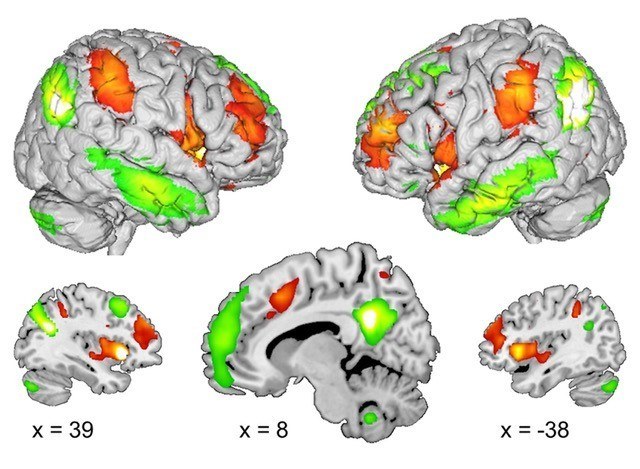
The study has two main objectives: It examines how stressful events continue to affect couples (“stress transmission”) and investigates whether mental well-being and stress resilience can be specifically improved through two different training approaches. The plan is to conduct a joint laboratory study examining couples’ stress experiences and the underlying neural processes, followed by an eight-week online training program designed to strengthen stress resilience, mental health, and social skills—for example, through stress reduction, increased clarity, greater life satisfaction, and improved perspective-taking. Depending on the condition, either one or both partners will participate. We are seeking couples aged 18 to 65—both with and without a history of depression in one partner.
“By participating, couples make an important contribution to better understanding depression and developing new support services. At the same time, they can benefit from the training themselves,” says Nina Alexander.
Research for Better Treatments
The project is part of a globally unique, large-scale research consortium investigating the course of affective disorders—the SFB/TRR 393 “Trajectories of Affective Disorders: Cognitive-Emotional Mechanisms of Symptom Change,” which has been funded by the German Research Foundation (DFG) since October 2024. Participating institutions include the universities of Marburg, Münster, Dresden, and Bonn, as well as KIT Karlsruhe. In 24 subprojects, researchers are investigating how affective disorders—such as depression and bipolar disorder—develop, progress, and change. The central question is which cognitive-emotional and neurobiological mechanisms influence relapses, remissions, and long-term trajectories. The goal is to better understand these key influencing factors and, building on this understanding, to develop new, targeted therapeutic approaches that sustainably improve the course of the disease.
Further Information
If you are interested or have questions, you can contact us without obligation by email at b5-trr393@uni-marburg.de.
Alternatively, you can book a phone appointment directly via a short online screening to schedule a follow-up meeting: https://redcap.zih.tu-dresden.de/redcap/surveys/?s=KK4Y3YY99DP3N7MK&prb_typ=3&standort=3
Contact
Prof. Dr. Nina Alexander
Tel.: 06421 58-65278
Mail: nina.alexander@uni-marburg.de
Zentrum für Psychische Gesundheit
Klinik für Psychiatrie und Psychotherapie
Fachbereich Medizin
Philipps-Universität Marburg